- Office Hours: M-F 8:30 AM - 5:00 PM

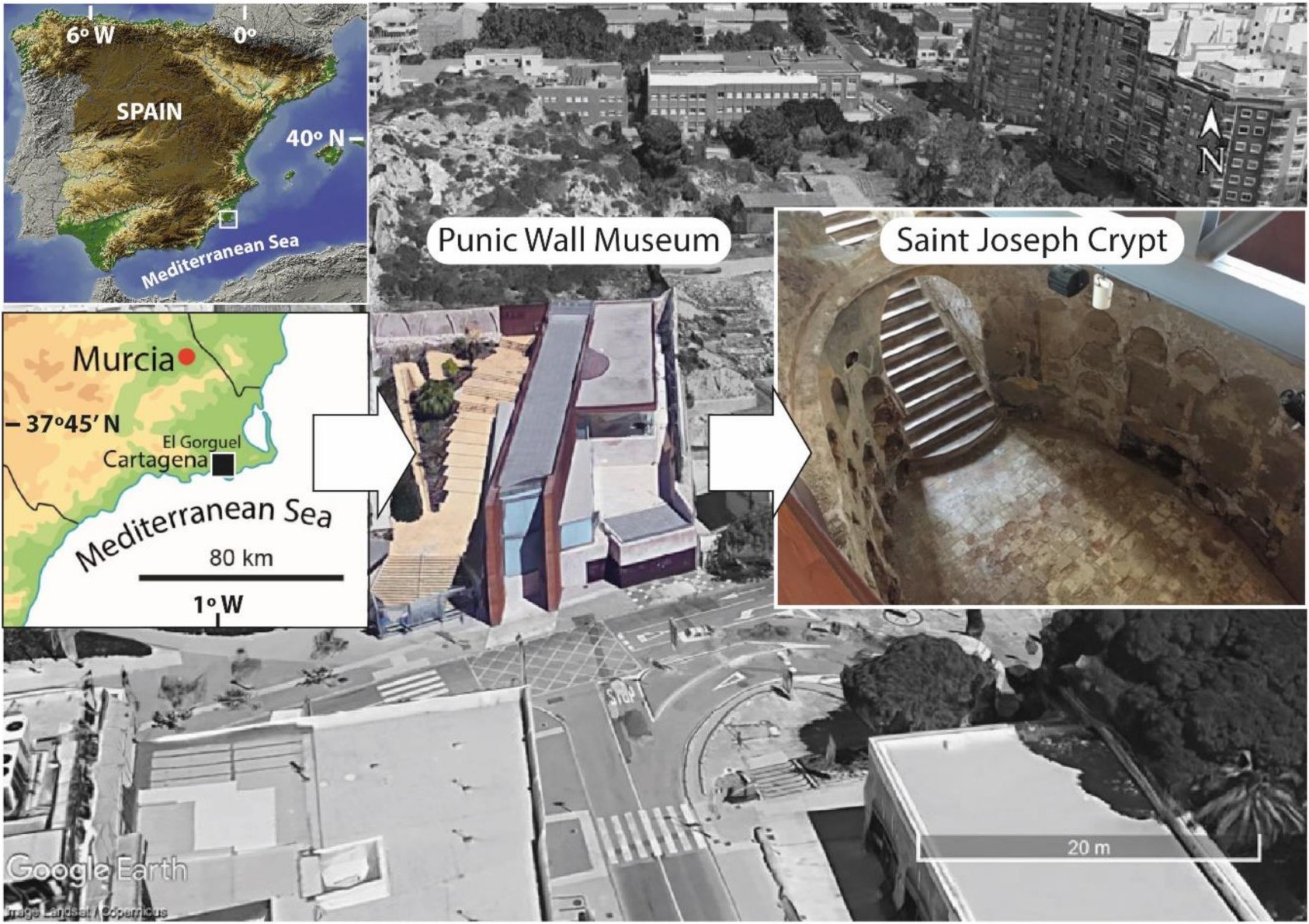
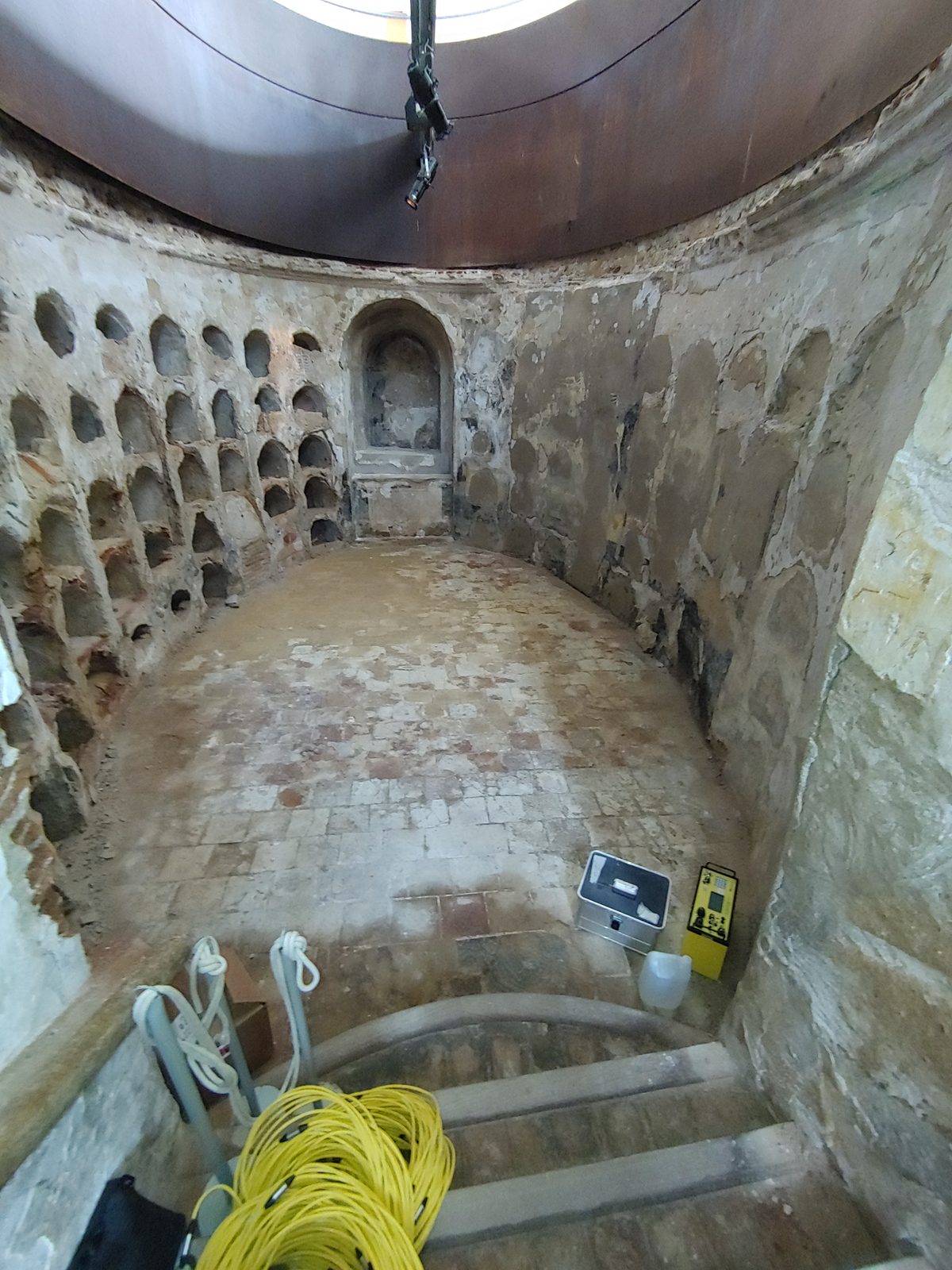
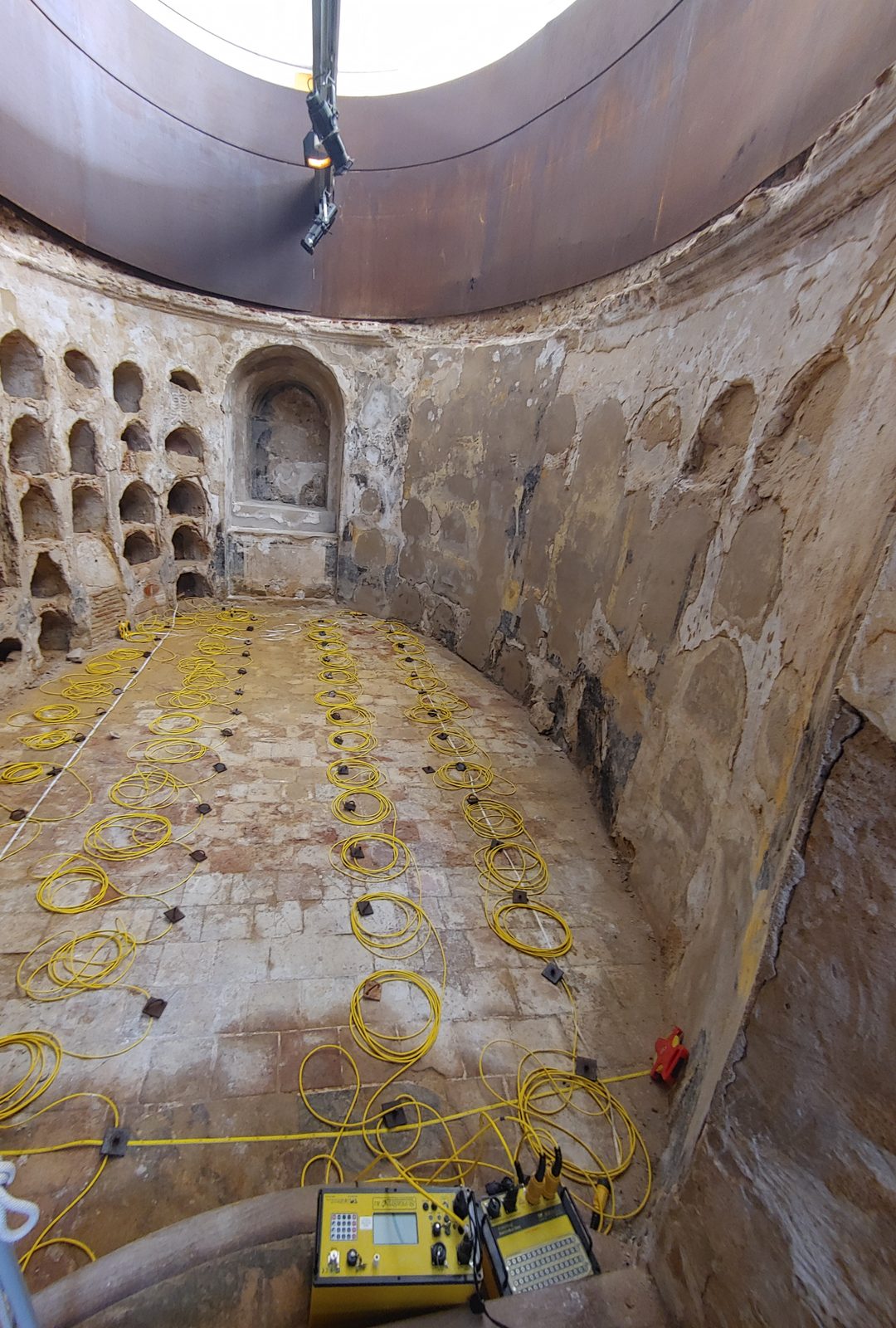
Cartagena, in southeast Spain, is full of Roman and Carthaginian remains. The Interpretation Centre of the Punic Wall is a museum built around remains of the Carthaginian wall from the Punic Wars and a funerary crypt from the late 16th or early 17th century, the Saint Joseph Crypt. The crypt floor is made of ancient, protected tiles. Drilling for spike electrodes was not allowed, and neither was clay, because it stains the tiles.
The geophysical aim was to build a 3D resistivity model of the subsurface beneath the funerary crypt and infer its structure. Resistivity depends on the lithology, fracturing, saturation and fluid content of the ground, so a reliable model can show how moisture, geology and foundations vary under the floor without any trenching or drilling.
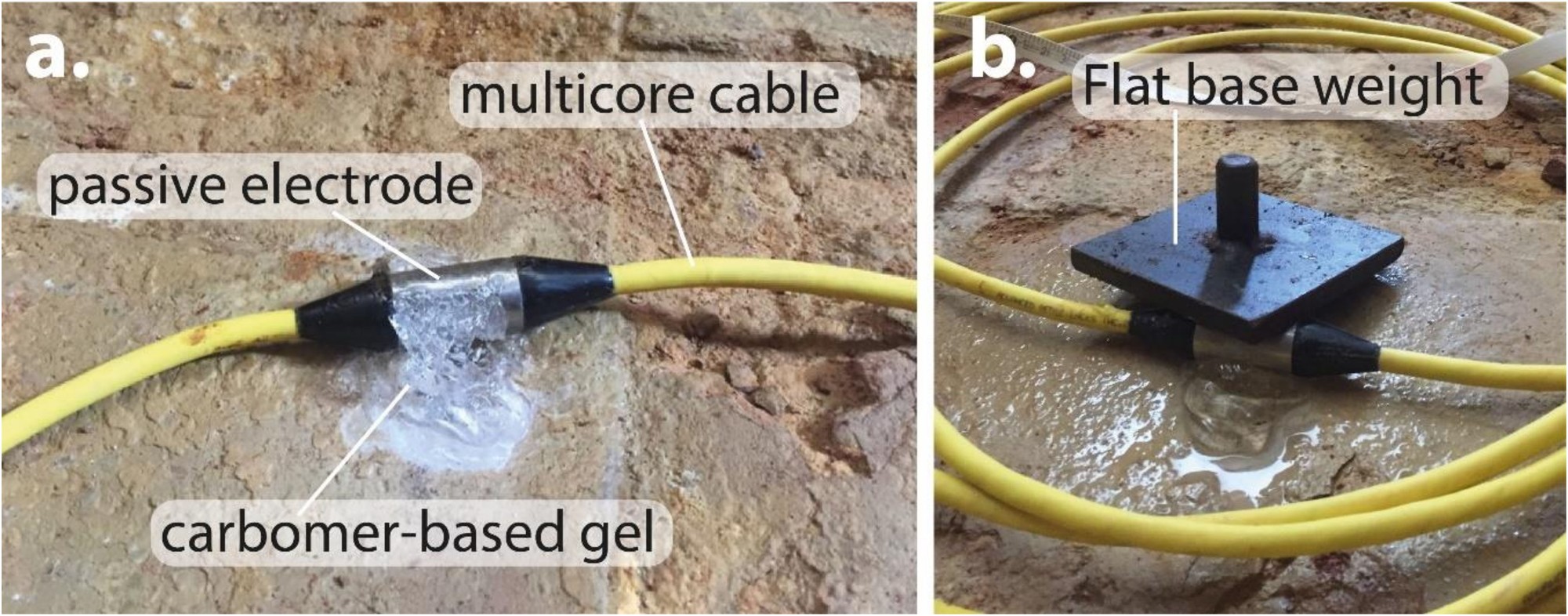
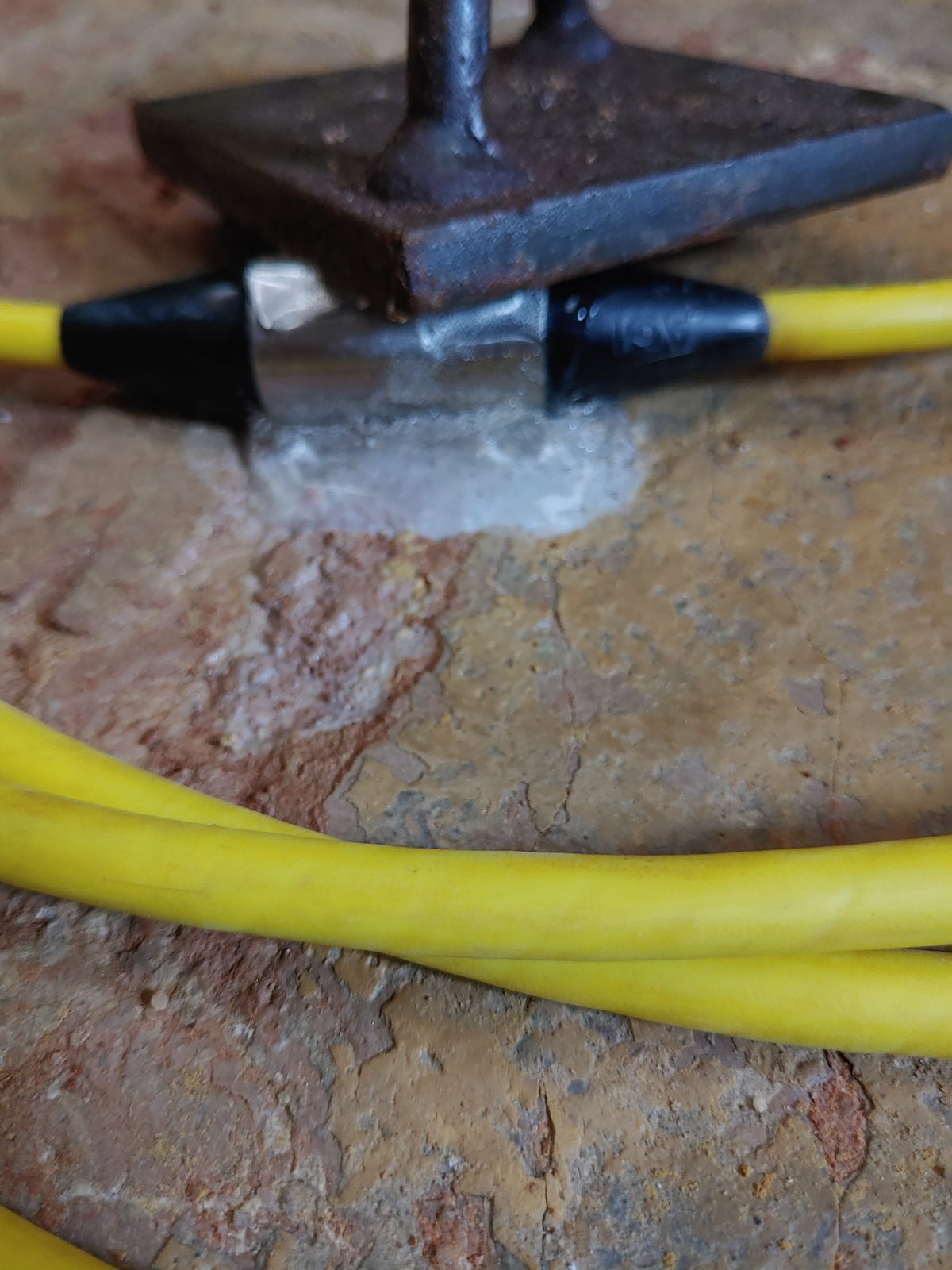
A second, practical aim was to test whether a commercial carbomer-based gel, a cosmetic product used in laser epilation and ultrasound, could give good ground–electrode contact for ERT on a protected floor, and to measure how much it improved contact resistance at every electrode takeout.
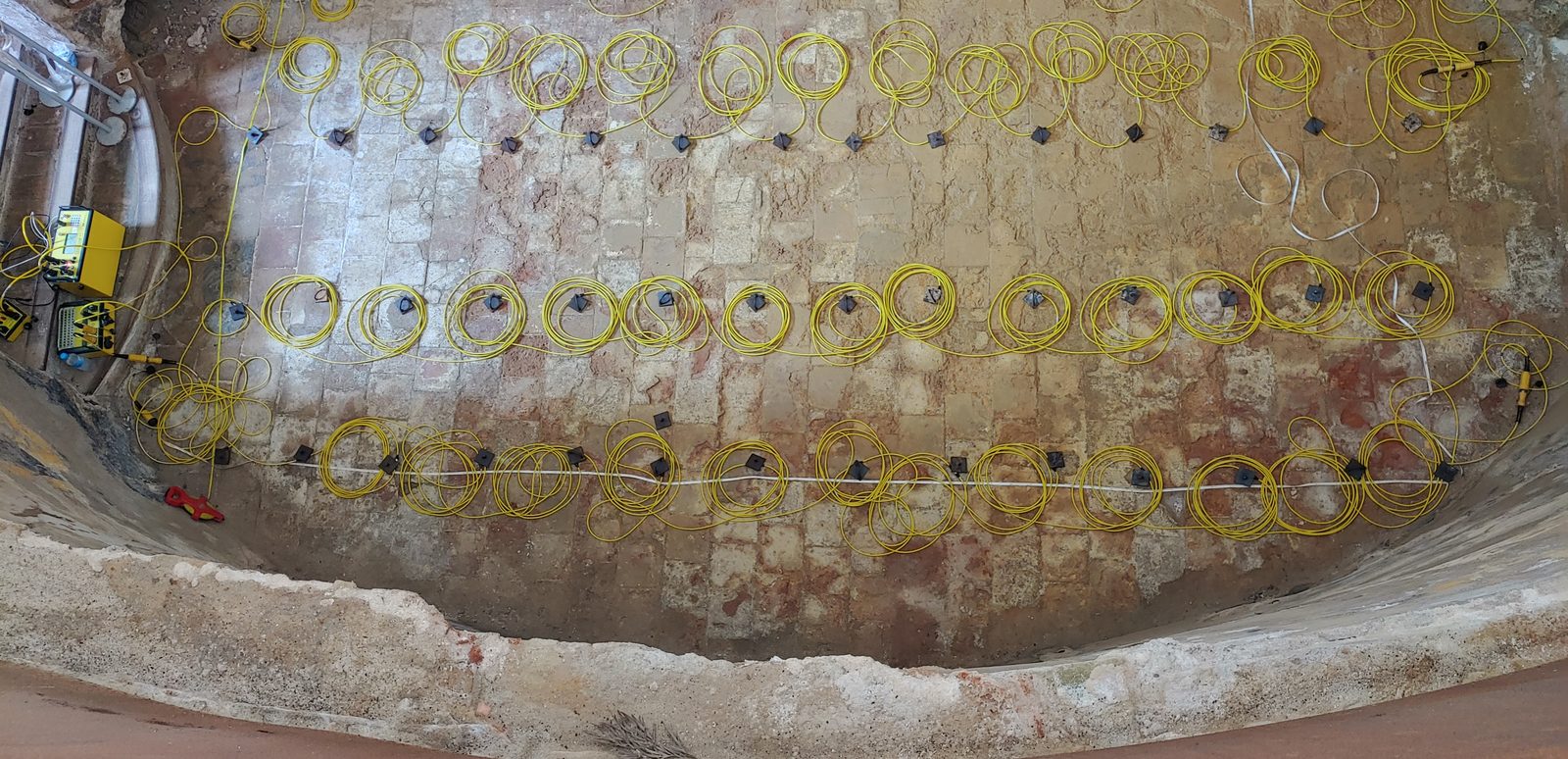
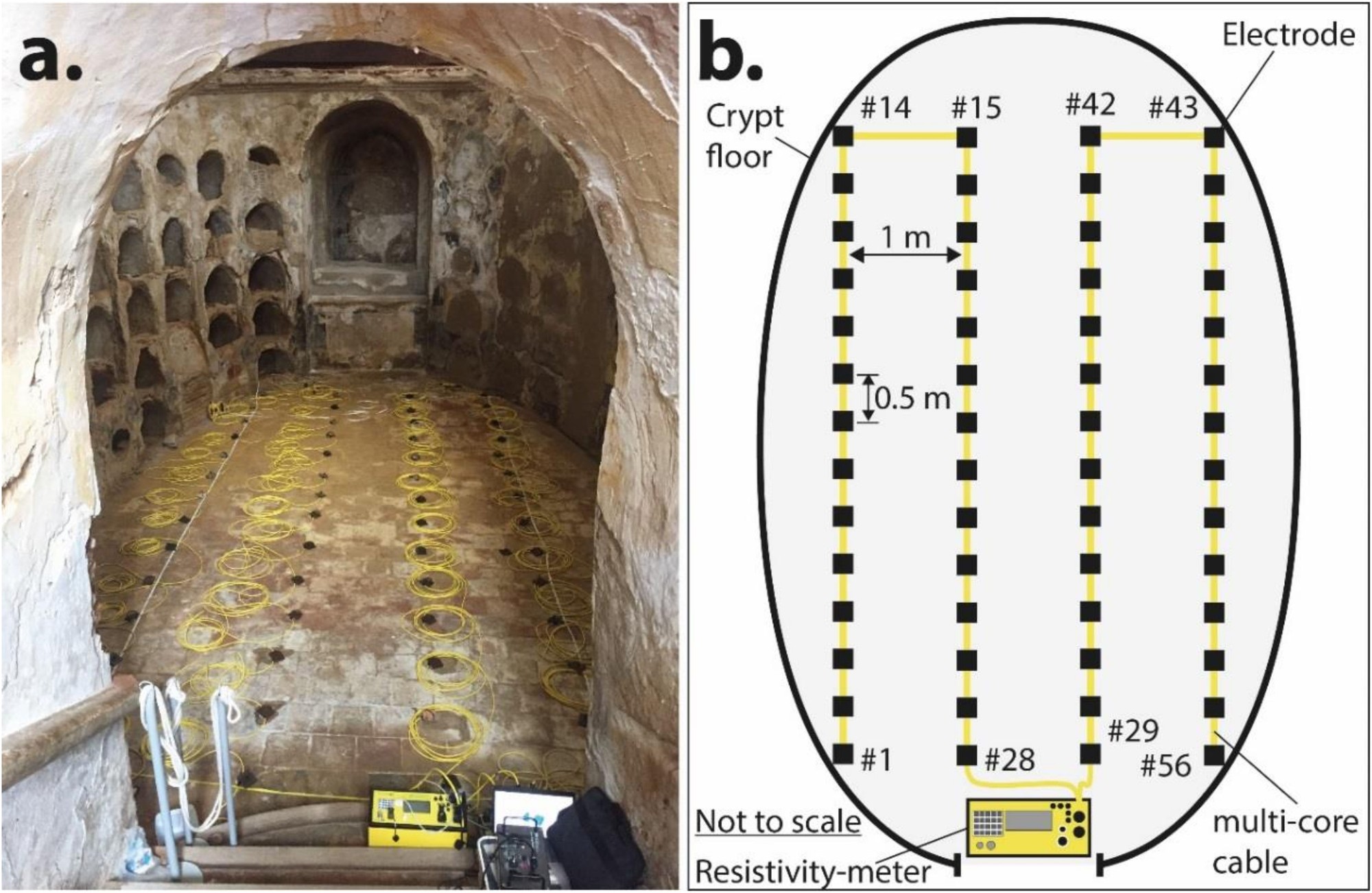
Data were recorded with an AGI SuperSting™ R1, a Multi-Electrode SwitchBox (56 electrodes) and four FlexLite Passive Electrode Cables of 14 electrodes each. The 56 electrodes were laid directly on the crypt floor in four parallel lines, 0.5 m apart along each line, with 1 m between lines. A thick layer of gel was put on each electrode, and a small metal weight was placed on top. A first check was made without gel. Dipole-dipole (516 measurements) and pole-dipole (624 measurements) data were then collected with the gel, giving 1,140 apparent resistivity values.
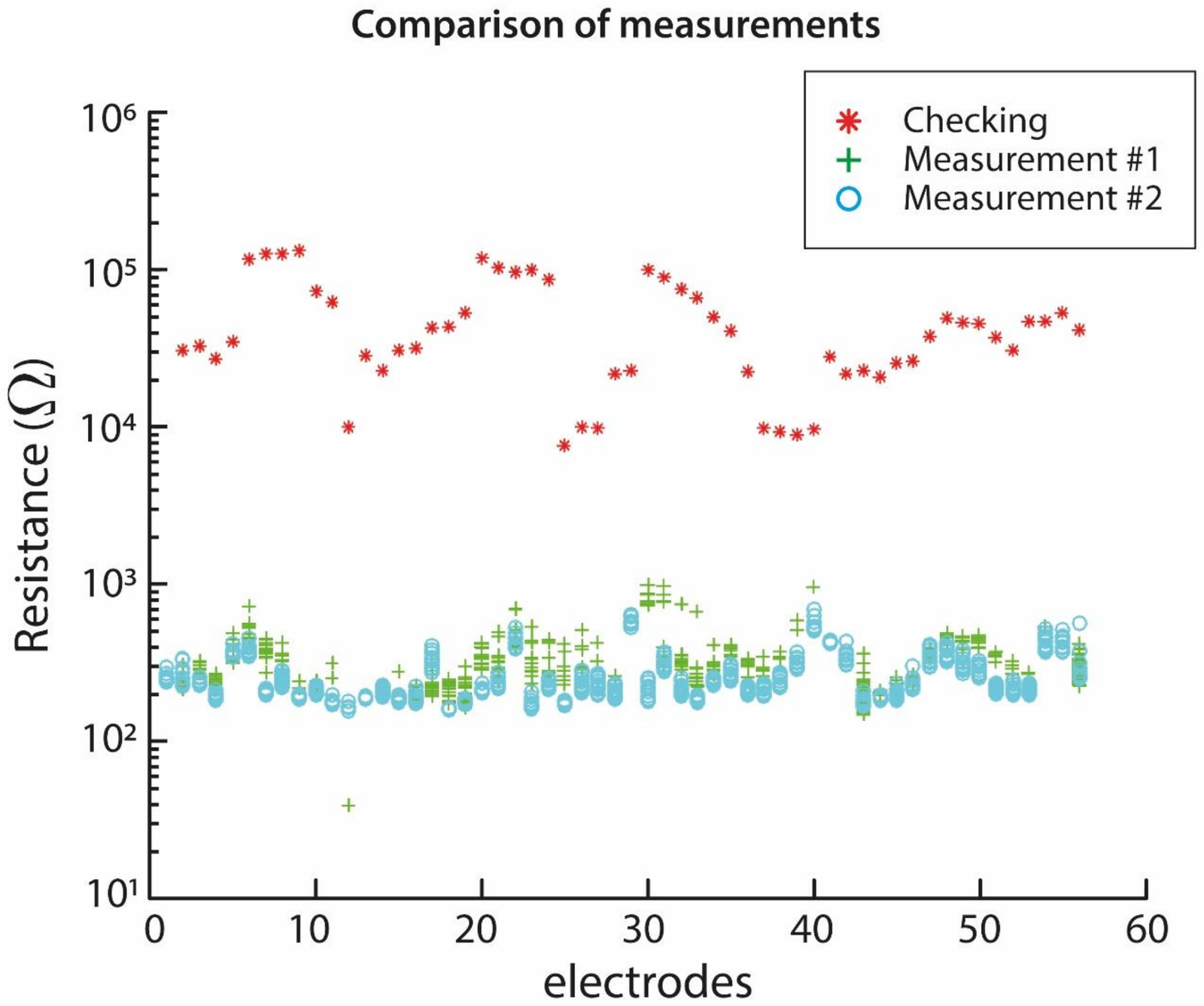
Contact resistance: Without gel, contact resistance ranged from 7,643 to 134,249 Ω (median 38,147 Ω), far too high for good-quality ERT data. With gel and a small metal weight on each electrode, values fell to a few hundred ohms for both arrays: medians of 289.8 Ω (dipole-dipole) and 229.3 Ω (pole-dipole), with maximums of 1,006 Ω and 698 Ω. AGI recommends contact resistance below 1,800–5,000 Ω for the SuperSting R1, with under 1,800 Ω as the best case. The standard deviation dropped from 35,244 Ω to 135 Ω and 97 Ω, so the data were much more stable. The gel left no stain on the tiles and was easy to remove.
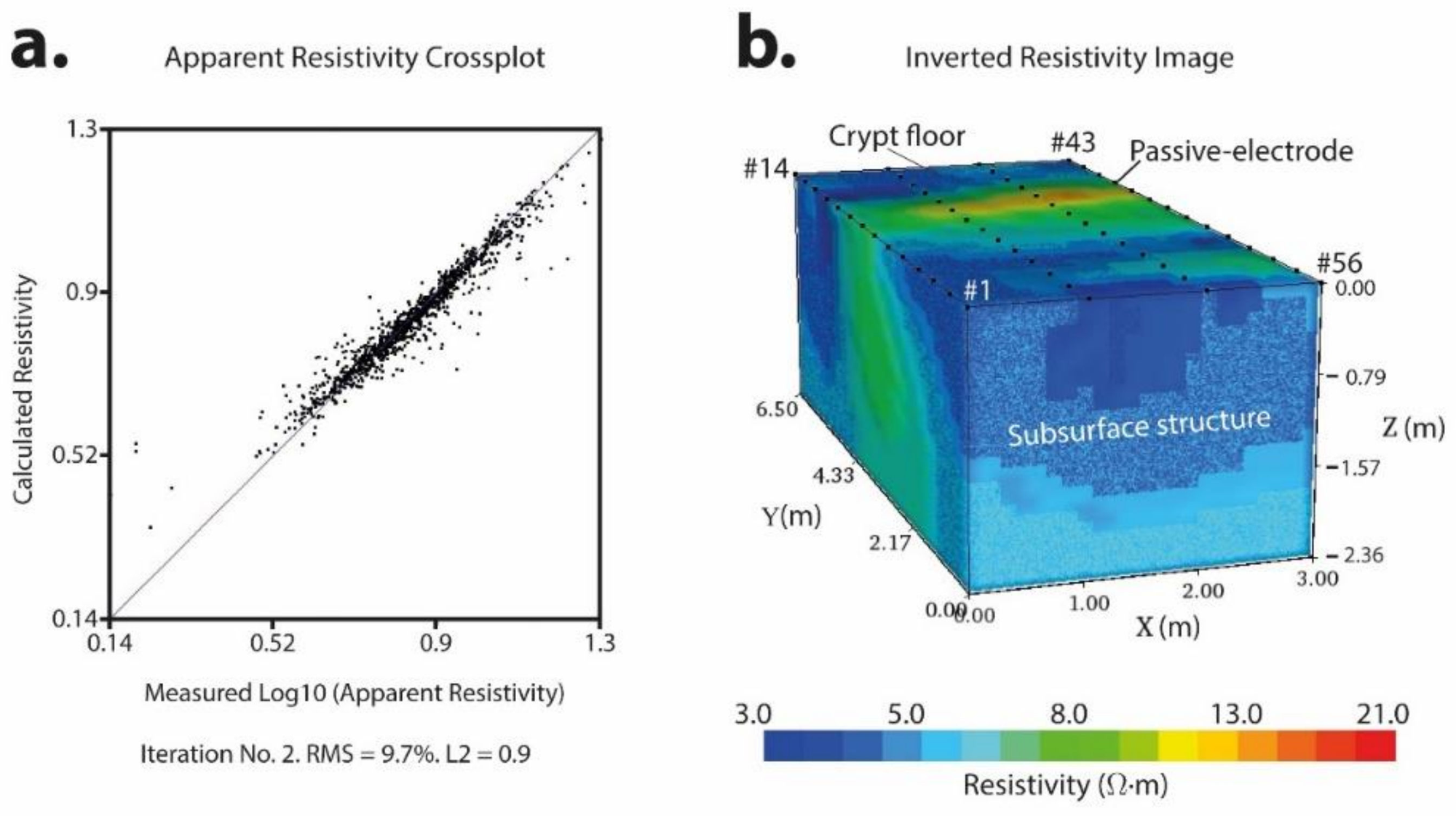
From contact to model: With low, uniform contact resistance, most of the injected current (362–841 mA) entered the subsurface with minimal losses. The authors call good contact the cornerstone of quality data, because it gives reliable raw data from which the subsurface can be inferred. The 1,140 apparent resistivity values ranged from 1 to 95 Ω·m, as expected for salty-water-saturated ground. The data were inverted in 3D with AGI EarthImager™ 3D. Measured and calculated values matched well, with an RMS error of 9.7%, so the authors considered the model high quality and accurate.
Subsurface interpretation: The model reached about 2.5 m depth. Its resistivity variations reflect inhomogeneities below the floor, such as moisture content, geology and foundations. Significant zones below 5 Ω·m were interpreted as probable water infiltration. A band of 8–21 Ω·m crosses the whole crypt horizontally, and this contrast may mark the boundary between the wet and dry zones.
Conclusion: The authors concluded that the gel solves a key limitation of ERT at archaeological sites, especially indoors, where contact must be improved without affecting the floor. They consider it suitable for similar studies and for geoelectrical work beyond archaeology.
Field tip: After the survey, wash all cable electrode takeouts with tap water to remove any remaining gel and salt and to avoid corrosion.
Data and survey details courtesy of: Marco D. Vásconez-Maza, Pedro Martínez-Pagán, María C. García-Nieto and Marcos A. Martínez-Segura, Department of Mining and Civil Engineering, Universidad Politécnica de Cartagena; and Hasan Aktarakçi, Advanced Geosciences Europe S.L. (Madrid). The authors acknowledge the “Cartagena Puerto de Culturas” organisation for its collaboration.
AGI products used:
Field photos: Advanced Geosciences Europe (AGE), taken on the survey day, 9 July 2020.
Source: Vásconez-Maza, M. D.; Martínez-Pagán, P.; Aktarakçi, H.; García-Nieto, M. C.; Martínez-Segura, M. A. (2020). Enhancing Electrical Contact with a Commercial Polymer for Electrical Resistivity Tomography on Archaeological Sites: A Case Study. Materials 13, 5012. doi:10.3390/ma13215012. © 2020 by the authors, licensee MDPI, Basel, Switzerland. Open access under the Creative Commons Attribution (CC BY 4.0) license. Figures reproduced under CC BY 4.0. Location imagery: Google Earth.